

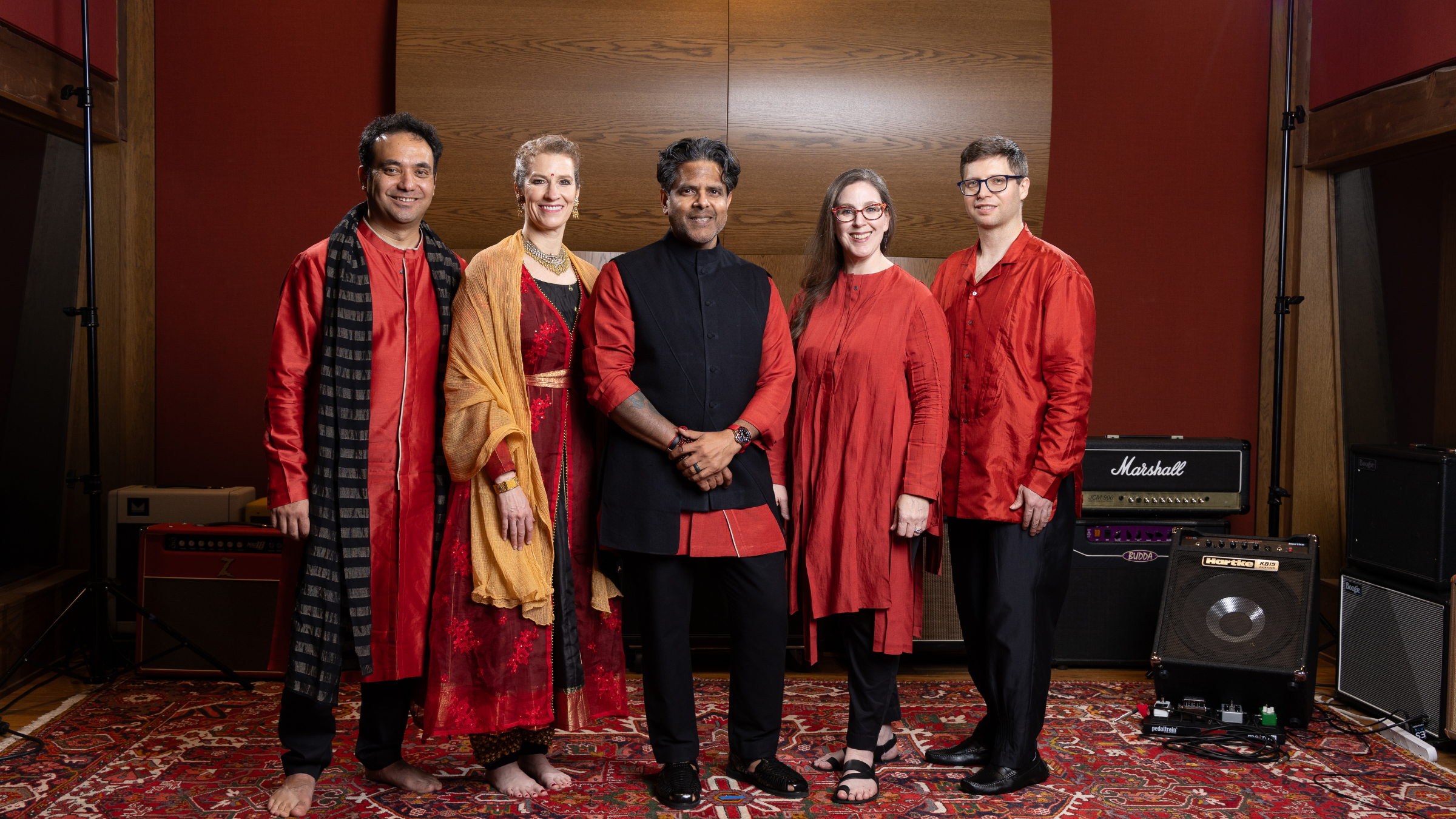
Who we are
Where Tradition, Improvisation, and Storytelling Meet
The Temporal Taal Collective brings together artists from diverse musical and cultural traditions to create performances that are both artistically compelling and deeply human. Blending the rhythmic sophistication of Indian classical music, the spontaneity of jazz improvisation, the scale and color of Western classical music, and the expressive power of Kathak dance, the ensemble creates immersive experiences that invite audiences into a shared musical conversation.
The Collective features Anjan Shah (bansuri and saxophone), Nabin Shrestha (tabla), Amy Shook (bass), Jonathan Epley (guitar), and, in select performances, Kathak dancer and scholar Sarah Morelli. Together, they explore the common threads that connect cultures, histories, and artistic traditions, revealing how music can serve as a bridge between communities while honoring the unique voices that shape each tradition.
Inspired by groundbreaking intercultural collaborations such as Yo-Yo Ma's Silkroad Ensemble and John McLaughlin's Shakti, the Temporal Taal Collective moves beyond genre labels to create experiences that feel both familiar and new. Their performances demonstrate that improvisation, storytelling, rhythm, and emotional expression transcend cultural boundaries, offering audiences meaningful points of entry regardless of their musical background.
Recent appearances include collaborations with the Charlotte Symphony, Hopkins Symphony Orchestra, Spectrum Studio Orchestra, and Bay Atlantic Symphony, as well as featured performances, clinics, and educational presentations at the Jazz Education Network Conference. Whether performing in concert halls, festivals, educational settings, or community spaces, the ensemble combines artistic excellence with a commitment to cultural dialogue, audience engagement, and community building.


A hallmark of the Collective's work is its commitment to creating original music. Members of the ensemble contribute compositions and arrangements that draw upon their individual artistic voices while reflecting the group's collaborative spirit. This growing body of repertoire serves as a meeting place for traditions, creating new works that honor the past while speaking to contemporary audiences.
Among the ensemble's signature collaborations is Nightfall Rhapsody, a 22-minute orchestral work by composer Drew Zaremba that weaves together Hindustani musical traditions, jazz improvisation, Western classical orchestration, and Kathak dance into a powerful narrative journey. The Collective is also developing new orchestral repertoire, including Anjan Shah's What The River Remembers, a large-scale work inspired by themes of memory, ancestry, belonging, ritual, loss, and continuity. Drawing from Shah's personal experience scattering his father's ashes in India, the piece explores universal questions of identity and connection while creating space for audiences from many backgrounds to see their own stories reflected in the concert hall.
The ensemble's performances often combine music, movement, storytelling, and cultural context, creating experiences that engage audiences visually, emotionally, and intellectually. For presenters and orchestras, the Collective offers programming that can function equally well as a mainstage performance, a community engagement initiative, or a multidisciplinary residency.
Equally important is the Collective's educational mission. Through clinics, workshops, residency programs, and interactive presentations, the ensemble explores topics including improvisation across cultures, rhythm and movement, musical identity, creative collaboration, composition, and the evolving role of the arts in a diverse society. These programs help students and audiences discover connections between traditions while encouraging curiosity, creativity, and cultural understanding.
At a time when arts organizations are seeking meaningful ways to welcome new audiences while remaining rooted in artistic excellence, the Temporal Taal Collective offers a model for how tradition and innovation can coexist. Their work demonstrates that when artists bring their authentic voices into the same space, music becomes more than performance—it becomes a place of connection, discovery, and shared experience.